Water Damage Restoration Services in Fort Worth, TX
Fast, Effective Water Damage Restoration for Fort Worth Homes
If you’ve lived in Fort Worth long enough, you know how unpredictable North Texas weather can be. One minute it’s dry and breezy, the next minute a fast-moving storm rolls across Tarrant County and overwhelms gutters, roofs, and foundations. Add in aging plumbing in neighborhoods like Wedgwood or TCU-area homes, plus the city’s slab-on-grade construction, and it’s no surprise that water damage can spread through a house with almost no warning.
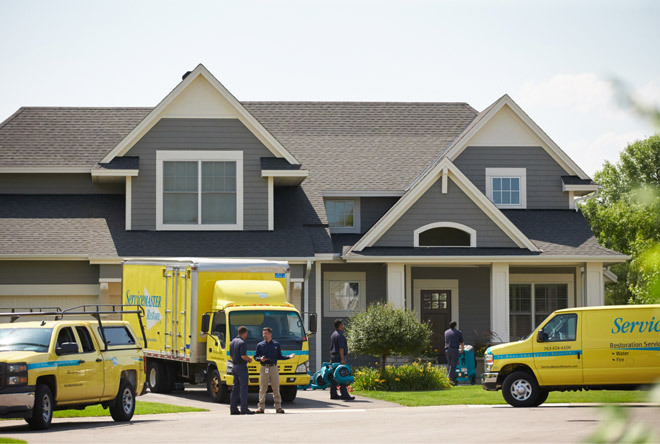
When water intrudes, you need clear answers — not panic. ServiceMaster CDR provides Water Damage Restoration Services in Fort Worth, TX designed specifically for the way Fort Worth homes are built, how moisture behaves in our climate, and how quickly hidden damage can escalate. We move fast, protect your structure, and help you get your home back to normal.
What Fort Worth Homeowners Need to Know About Water Damage Restoration Services in Fort Worth, TX
Water doesn’t just “get things wet.” It interacts with your home’s materials in predictable — and destructive — ways. Understanding how water damage works helps you make informed decisions in those first crucial hours.
- Drywall wicks moisture upward, sometimes as high as 12–24 inches, which is why controlled flood cuts are standard under IICRC S500 guidelines.
- OSB and particle board — common in Fort Worth kitchen cabinets and subfloors — swell quickly and often cannot be salvaged.
- Brick veneer exteriors and slab foundations, typical throughout Fort Worth, allow water to slip behind walls when hydrostatic pressure builds after heavy rain.
- High humidity slows drying, making mold growth more likely within 24–48 hours unless action is taken.
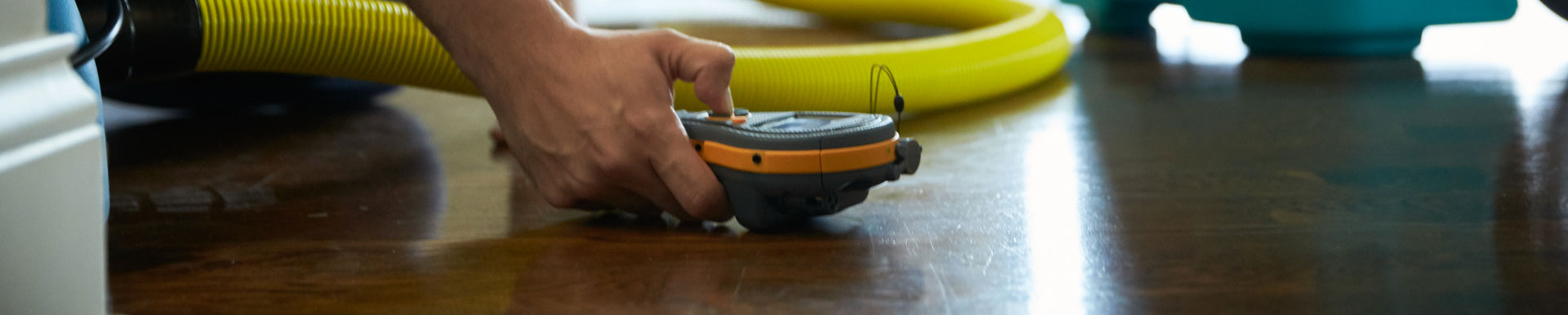
- Certified technicians follow industry standards to assess, extract, dehumidify, and verify dryness with moisture meters, hygrometers, and infrared imaging.
These technical steps aren’t optional — they’re the difference between a fully restored home and months of hidden structural or microbial damage.
Why North Texas Weather Makes Water Damage Cleanup in Fort Worth More Urgent Than You Think
Fort Worth’s climate is tough on homes. Between sudden storms, hail events, and rapid temperature swings, structures endure more stress than many homeowners realize.
- Fast-moving thunderstorms funnel water toward foundations in Benbrook, Forest Hill, and other low-lying areas with drainage challenges.
- Soil expansion and contraction — especially after drought-to-downpour cycles — causes slab cracks and water entry points.
- High humidity near the Trinity River keeps framing, drywall, and insulation wetter for longer periods.
- Roofing systems see accelerated wear from hail and UV exposure, making attic leaks increasingly common.
- EPA and CDC guidelines warn that wet materials can harbor mold in as little as two days, an especially urgent concern after weather events.
In short, the climate here isn’t forgiving — and neither is water. That’s why immediate cleanup is essential.
Hidden Moisture Risks: How Water Travels Behind Walls, Floors, and Cabinets
Even if the surface looks dry, water often migrates into concealed areas where it quietly causes long-term damage. When homeowners search for Fort Worth water damage repair, they’re often dealing with moisture that traveled farther than expected.
- Capillary action pulls water upward into framing cavities behind walls.
- Particle board cabinets around sinks and kitchen islands typically deform and delaminate beyond repair.
- Laminate flooring traps water underneath, creating a perfect environment for mold.
- Technicians use infrared cameras to detect temperature differences that indicate hidden moisture.
- Moisture meters confirm what materials can be dried versus what must be removed.
Leaving hidden moisture behind is one of the most common — and most expensive — mistakes homeowners make after a water intrusion.
Water Extraction in Fort Worth: What Really Happens When the Pros Arrive
DIY tools simply can’t match professional-grade equipment used for water extraction Fort Worth homeowners rely on.
- Truck-mounted extractors pull moisture from carpet and padding far more effectively than shop vacs.
- Weighted extraction tools push water up and out of carpet fibers to speed drying.
- Submersible pumps handle standing water in garages or low-lying rooms.
- Gray or contaminated water requires strict protocols to remove unsanitary materials.
- IICRC criteria determine what carpet, padding, and baseboards must be discarded versus restored.
Rapid extraction is the first major step in preventing secondary damage and stabilizing the structure.
Emergency Water Cleanup: How ServiceMaster CDR Protects Your Fort Worth Home from Secondary Damage
Once the standing water is gone, emergency water cleanup begins — and this is where most long-term losses are prevented.
- Secondary damage includes mold, warped doors, buckled flooring, and damaged electrical systems.
- Controlled demolition (such as removing baseboards or cutting access holes) allows airflow where moisture hides.
- Air mover placement is calculated to achieve proper evaporation rates across affected surfaces.
- Dehumidification systems remove moisture vapor from the indoor air during drying.
- Daily moisture monitoring ensures drying is progressing according to professional standards.
This phase is critical to preventing what insurance companies classify as “avoidable additional damage.”
Drying & Dehumidification in Fort Worth’s Humid Climate: What Homeowners Should Expect
Fort Worth’s humidity works against drying, which makes professional oversight essential.
- Refrigerant vs. desiccant dehumidifiers are chosen based on temperature, humidity, and material saturation levels.
- Vapor pressure differentials must be managed to encourage evaporation rather than condensation.
- Homes near the Trinity River often remain humid longer, requiring extended drying cycles.
- EPA guidelines emphasize moisture control as the core of mold prevention.
- Equilibrium Moisture Content (EMC) is the benchmark for determining when materials are safe.
Without proper dehumidification, mold growth becomes almost inevitable.
Final Restoration & Repairs After Water Damage in Fort Worth Homes
Once drying is complete, the restoration phase repairs everything the water affected.
- Drywall repairs or replacements restore wall integrity and appearance.
- Flooring reinstalls ensure structural stability, especially when laminate or engineered wood was damaged.
- Cabinet replacement may be necessary when swelling or delamination occurs.
- HEPA vacuuming and antimicrobial treatments remove residual contaminants.
- Insurance documentation is provided to support your claim and streamline communication with adjusters.
ServiceMaster CDR handles every stage with precision and transparency so your home returns to pre-loss condition as quickly as possible.
Need Help Now? Call Your Local Fort Worth Water Damage Pros
Water spreads fast — especially in our humid North Texas climate — and the longer it sits, the more expensive the repairs become. If you’re unsure where the moisture went or how bad the damage is, call now and let a local expert walk you through your next steps.
FAQs
How fast can water damage lead to mold in a Fort Worth home?
In most cases, mold can begin growing within 24–48 hours. High humidity, like we often see in Fort Worth, makes conditions even more ideal for mold growth. EPA guidance recommends drying all wet materials as quickly as possible to prevent colonization.
Do I need to replace my drywall after a water leak?
It depends on how high the moisture traveled. If drywall absorbed water above the 12-inch mark, flood cuts are typically needed. Technicians measure moisture levels to determine whether drying or replacement is the safest option.
Are slab foundations in Fort Worth more vulnerable to water issues?
Yes. Movement in the soil, combined with heavy storms, can push water through cracks or gaps in the slab. Homes with poor drainage or aging plumbing lines are especially susceptible.