Appliance Leak Clean-Up Services in Manhattan, KS
Stop Appliance Leaks Before They Ruin Your Home
If you’ve ever walked into your kitchen and heard that slow drip beneath the sink or noticed a puddle near your washing machine, you know how unnerving it can be. In Manhattan, KS, where many homes feature older plumbing and laundry rooms tucked into finished basements, even a small appliance leak can turn into a serious problem fast. Between the humidity rolling in from the Kansas River and the mix of older homes around Aggieville and Grand Mere, moisture loves to linger where you least expect it.
At ServiceMaster Rapid Response, we understand how overwhelming water damage can feel — especially when it comes from something as ordinary as a dishwasher or refrigerator. Our IICRC-certified technicians use professional drying systems and moisture mapping tools to ensure every inch of your home is safe, clean, and dry. Whether your leak started in the laundry room or under the kitchen floor, our goal is to get your home back to normal quickly and protect it from future damage.
A hidden appliance leak could be silently damaging your home. Contact us now to get expert cleanup before it gets worse.
Why Appliance Leak Clean-Up Services in Manhattan, KS Are So Urgent
Appliance leaks are deceptive — they rarely gush like a burst pipe, but they cause just as much damage over time. A slow leak under a refrigerator or washer can soak into flooring, wick up drywall, and promote hidden mold growth within 24–48 hours.
Our technicians often see homes where the visible damage is minor, but moisture meters tell a different story: damp insulation, warped baseboards, and hidden microbial growth beneath vinyl floors. According to IICRC S500 standards, prompt mitigation is crucial because water spreads horizontally and vertically through porous materials.
In Manhattan, where humidity levels stay high during summer and many basements are below grade, trapped moisture worsens quickly. Even if the surface feels dry, subflooring or drywall can remain saturated for days. Acting fast with professional cleanup not only prevents structural damage but can also keep your insurance coverage intact — since delayed response often leads to claim denial for “neglect.”
Common Causes of Appliance Leaks in Kansas Homes
Most appliance leaks start quietly. Over time, a small connection loosens or a seal weakens, allowing water to escape behind or beneath an appliance. In Manhattan’s hard-water environment, mineral buildup accelerates this wear.
Here are the most common culprits our team sees:
- Dishwasher door gaskets and supply lines: Rubber seals dry out and crack, allowing small drips that spread beneath cabinetry.
- Refrigerator ice maker lines: Thin plastic tubing can split behind the wall, leaking undetected for months.
- Washing machine hoses: Aging rubber hoses are notorious for bursting, especially when vibration loosens fittings.
- HVAC condensate drains: Clogged or overflowing pans can spill water into ceilings and nearby walls.
- Water heater fittings: Corroded joints or valves can lead to constant dripping, especially in basements with limited airflow.
Many homes in Northview and around Kansas State University still rely on older copper or vinyl supply lines — materials more prone to pinhole leaks than modern braided steel hoses. Replacing those small components now can prevent hundreds of gallons of water from seeping into flooring later.
Don’t wait until mold or structural damage appears. Call today and we’ll restore your home thoroughly and quickly.
What to Do Immediately After an Appliance Leak
The first few minutes after discovering a leak can make all the difference in how extensive the damage becomes. Follow these expert-recommended steps before our team arrives:
- Shut off the water supply to the leaking appliance or the main water line if necessary.
- Cut the power to affected areas — especially near dishwashers, washing machines, or outlets — to prevent shock hazards.
- Blot and contain visible water, but avoid lifting flooring or drilling holes. Disturbing materials can spread contamination.
- Use fans sparingly. Without dehumidifiers, fans can spread moisture through the air, increasing condensation elsewhere.
- Document the scene for your insurance company before cleanup begins.
Once our specialists arrive, we’ll assess the full extent of damage using infrared cameras and moisture meters. We handle drying, sanitizing, and structural restoration safely and efficiently — so you don’t have to take chances with hidden moisture or mold.
How Our Technicians Restore Water-Damaged Areas
Appliance leak cleanup requires more than just drying the surface. Water often migrates under baseboards, cabinetry, and tile grout. ServiceMaster Rapid Response follows industry-recognized procedures based on IICRC standards to ensure total restoration.
Our Process Includes:
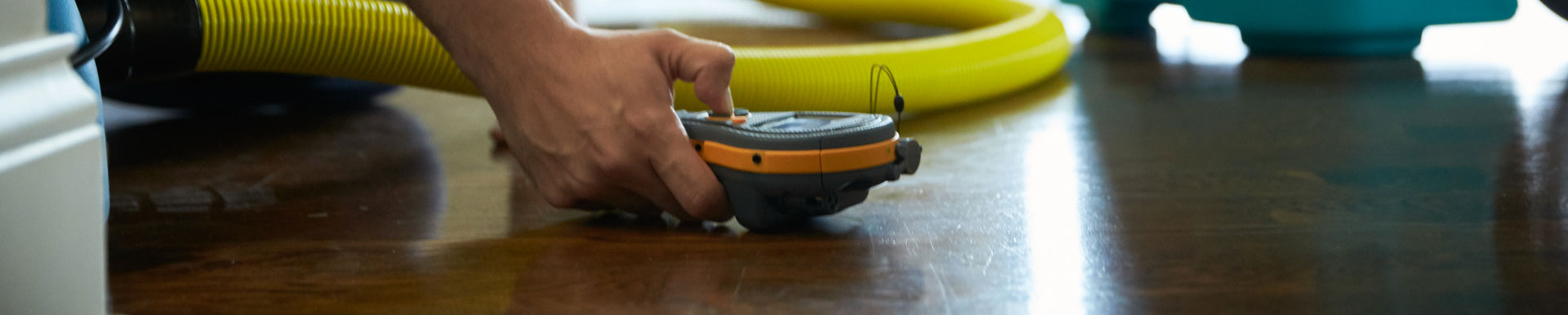
- Comprehensive moisture inspection: We use infrared imaging and calibrated meters to map all affected areas — including those invisible to the eye.
- Controlled demolition: If water has wicked behind toe-kicks or into drywall, we remove small sections for ventilation.
- High-volume drying equipment: Our industrial dehumidifiers and air movers create cross-flow that speeds evaporation while maintaining safe humidity levels.
- HEPA-filtered air cleaning: This removes airborne particles, spores, and contaminants disturbed during drying.
- EPA-registered disinfection: We sanitize affected areas to neutralize bacteria and prevent odor.
Every job includes daily monitoring until moisture readings return to baseline levels. Once fully dry, we provide documentation you can use for insurance claims or property records.
Protecting Your Floors, Cabinets, and Drywall from Long-Term Damage
Different materials respond to water exposure in very different ways. Understanding these behaviors helps homeowners make informed decisions about repair or replacement.
- Particle board cabinets swell quickly and rarely return to shape — replacement is often necessary.
- Hardwood floors can cup and warp as fibers absorb moisture unevenly; slow, controlled drying minimizes cracking.
- Vinyl and laminate flooring often traps water underneath, leading to subfloor rot.
- Drywall acts like a sponge, pulling moisture upward through capillary action; the lower sections may need cutting and replacement.
- Baseboards and trim hide pockets of water where mold can grow unnoticed.
In humid Manhattan summers, especially in basement laundry rooms, residual moisture is a long-term threat. Installing moisture alarms, upgrading hoses to braided steel, and scheduling professional inspections can help you stay ahead of future leaks.
Why Manhattan Homeowners Trust ServiceMaster Rapid Response
When an appliance leak disrupts your home, you need more than just cleanup — you need confidence it was handled correctly. ServiceMaster Rapid Response brings decades of local experience serving Manhattan, Wamego, and Junction City.
Homeowners choose us because:
- We’re IICRC-certified for water damage restoration and structural drying.
- Our technicians are trained in appliance-specific water loss scenarios.
- We offer 24/7 emergency response and arrive quickly from our local base.
- We work directly with your insurance provider to simplify the claims process.
- We treat your home with respect — containing affected areas and minimizing disruption.
Whether you’re in a newly built subdivision or a historic home near downtown, we tailor our restoration approach to your property’s specific needs. Our combination of advanced equipment, technical precision, and personal service makes us the trusted choice for appliance leak clean-up in Manhattan, KS.
From dryers to dishwashers — leaks happen in the most unexpected places. Contact us now and let the professionals handle it.
Prevent Future Appliance Leaks Before They Start
The best water damage is the kind that never happens. A few small preventive steps can save thousands in repairs and insurance headaches.
Here’s what our experts recommend:
- Replace rubber washing machine hoses every five years with braided stainless steel.
- Inspect refrigerator water lines annually for cracks or mineral deposits.
- Install moisture sensors under dishwashers, sinks, and laundry machines.
- Check your water heater and HVAC drains during seasonal maintenance.
- Keep our 24-hour emergency number handy in case a sudden leak occurs.
By staying proactive, you protect not just your flooring and cabinetry — but your peace of mind. And if a leak ever does occur, ServiceMaster Rapid Response is just a call away.
Your Local Partner for Water Damage Restoration in Manhattan, KS
Even a “minor” appliance leak can compromise drywall, insulation, and flooring if ignored. Our team combines advanced drying technology with an understanding of local housing structures and Kansas humidity patterns to ensure every job is done right.
From washing machine overflow cleanup to dishwasher leak repair, we bring expert care to every home we serve. If you suspect water damage — even if you can’t see it — don’t wait. The sooner you call, the easier and more affordable your restoration will be.
Call ServiceMaster Rapid Response today for expert Appliance Leak Clean-Up Services in Manhattan, KS. We’re your neighbors, your cleanup specialists, and your first line of defense against hidden water damage.
FAQs
How long does it take to dry my home after an appliance leak?
Most homes dry within 2–4 days, depending on humidity and materials. We monitor moisture daily using thermal imaging and professional meters to ensure complete drying.
Will my homeowners insurance cover this?
Most policies cover sudden and accidental leaks, like a burst hose or supply line. We help document the loss, communicate with adjusters, and streamline your claim.
Can I clean up a small leak myself?
You can mop up visible water, but trapped moisture beneath floors or cabinets requires professional drying. DIY cleanup often leaves damp areas that lead to mold growth later.
Your floors and drywall deserve more than a quick wipe. Call now for professional drying and restoration services.