Firefighting Damage Restoration Services in Seattle, WA
The Fire’s Out—Now Let’s Handle the Aftermath
Fires don’t just burn, they soak, stain, and settle deep into the home. From Ballard to West Seattle, homes here face more than just flames. Our region’s densely built neighborhoods, abundant wood construction, and near-constant dampness make the aftermath of firefighting efforts especially complex.
Once the fire is extinguished, gallons of water, thick smoke, and chemical residue often remain. Add in Seattle’s heavy rains, tight property lines, and older homes in areas like Capitol Hill or Shoreline, and you’ve got a restoration challenge that requires real local expertise. That’s where we come in.
At ServiceMaster of Seattle, we specialize in Firefighting Damage Restoration Services in Seattle, WA, tackling the full scope of post-fire cleanup with the right tools, training, and understanding of what makes homes in our area unique.
Your Seattle Partner for Full Firefighting Damage Recovery
We don’t just clean up, we restore, rebuild, and protect your home. Our team is based right here in Seattle, ready 24/7 to respond with industry-certified methods and personal, local care.
Why Firefighting Efforts Leave Lasting Damage You Can’t Ignore
Fire suppression often causes as much trouble as the fire itself. Thousands of gallons of water used to put out the flames soak through drywall, insulation, and subflooring. In Seattle’s damp climate, moisture can linger and invites mold.
Water and foam from firefighting can:
- Saturate wall cavities and flooring, especially in older homes with lathe and plaster.
- Soak insulation and framing, increasing the risk of rot or structural weakening.
- Bond soot and smoke particles into porous materials.
- Spread water under baseboards, into crawl spaces, and through electrical chases.
Professional inspections following IICRC S500 and S520 standards are critical. Without them, hidden water damage and mold could remain undetected for weeks.
Advanced Moisture Detection and Damage Mapping
What you see after a fire is only the beginning. Moisture hides in walls, and floors and if you don’t find it, it will find a way to cause damage.
We use:
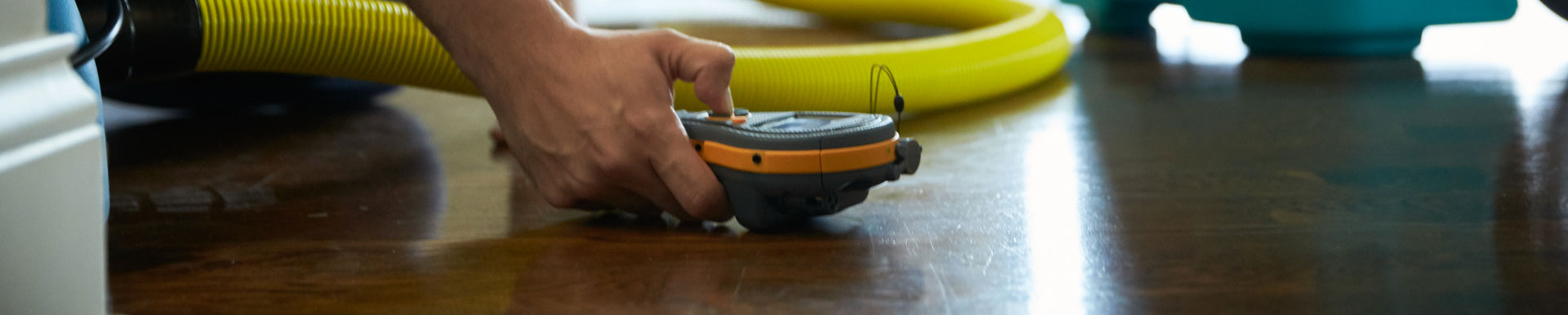
- Moisture meters and thermal imaging to identify saturated materials.
- Damage mapping to guide cleanup and provide clear documentation for insurance.
- Specialized inspection techniques for Seattle’s older homes, where plaster walls can mask deep water intrusion.
Whether it’s behind your kitchen cabinets, under hardwood floors, or tucked into attic insulation, we track and document every moisture pocket.
Complete Water Extraction and Structural Drying
Removing standing water is step one. Our team uses high-capacity extraction units to remove moisture fast, before it spreads deeper into your home.
We tailor our drying systems to Seattle’s unique climate:
- Air movers and dehumidifiers are positioned to overcome high humidity and cooler temperatures.
- Floor drying mats help salvage hardwoods common in older homes.
- Cavity drying systems inject dry air into walls and enclosed spaces to stop mold before it starts.
- Following IICRC drying protocols ensures your home is safely dried inside and out.
- Incomplete drying often leads to secondary damage like warped studs, swollen trim, or even ceiling collapse.
Soot, Smoke, and Odor Removal — Beyond Surface Cleaning
Smoke seeps into porous materials like drywall, woodwork, upholstery, and HVAC systems and stays there unless fully treated.
To remove those from within materials, we use:
- HEPA vacuums and chem sponges to remove fine soot particles.
- Specialized cleaning agents designed to break chemical bonds in smoke residue.
- Thermal fogging and ozone treatments to neutralize persistent odors.
Seattle’s vintage homes present special challenges, old-growth wood and plaster can absorb odors deeply, and without complete HVAC cleaning, even a spotless room can carry the smell of fire.Safe Debris Removal and Hazard Management
Fire leaves behind more than charred debris. Burned electronics, plastics, and synthetic materials release harmful residues that require professional handling.
Our crews follow strict safety protocols, including:
- Containment of dust and airborne particles in small Seattle homes with limited airflow.
- Careful separation and disposal of hazardous materials per local environmental regulations.
- Staging areas for debris that protect surrounding property and allow for safe transport.
Fast, thorough debris removal is essential not just for health, but to allow engineers and contractors to assess the structure underneath.
Rebuilding and Protecting Against Future Fire and Water Risks
When we start a restoration project, it’s a chance to build stronger and choose materials that stand up to the elements. We often use:
- Fire-resistant insulation and drywall for increased safety.
- Moisture-resistant flooring and wall materials to reduce future water risk.
- Waterproofing and sealing in basements and crawlspaces, especially critical in Seattle’s wet fall and winter seasons.
- Integrated smoke detectors and sprinkler systems to alert and contain future fires.
- Local know-how for working within historic district guidelines.
Our licensed restoration experts know local codes, permitting, and neighborhood nuances, so that we can help you rebuild smarter not just faster.
Call Now for Firefighting Damage Restoration Services in Seattle, WA
When the flames are out, the real work begins. From Shoreline to Renton, our team is ready to help you recover. Whether you’re working through insurance or paying out of pocket, we’ll guide you through every step with clarity and care.
Call ServiceMaster of Seattle today for professional Firefighting Damage Restoration Services in Seattle, WA. We’re available 24/7 to get you back home safely.
Frequently Asked Questions
How long does it take to fully restore my home after firefighting damage?
It depends on the extent of water and smoke damage, but most homes begin recovery within days and are fully restored in several weeks. We provide a clear timeline after our assessment.
Can I stay in my home during restoration?
Sometimes. It depends on the damage, air quality, and safety concerns. If relocation is needed, we coordinate with your insurance for temporary housing.
What parts of my home are most vulnerable after firefighting efforts?
Drywall, insulation, flooring, and interior wall cavities are especially at risk — even if the damage isn’t immediately visible. That’s why professional moisture inspection is essential.