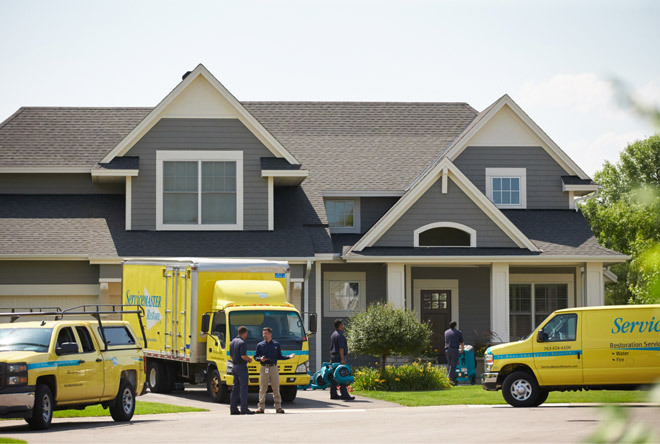
Water Damage Restoration in Dawson County
24/7 Water Damage Help for Dawson County Homes & Businesses
Water can spread through a property in a short time, soaking walls, flooring, and belongings and leaving hidden moisture behind. When that happens, you need more than a fan and a mop. You need a trained team that can respond quickly, remove the water, and start protecting your property right away.
ServiceMaster of Mid Nebraska provides around-the-clock water damage help in Dawson County for both homes and businesses. Whether you are dealing with a burst pipe in the middle of the night or a roof leak after a severe storm, our team is ready to take your call and mobilize our restoration technicians.
We are part of a national network backed by over 65 years of disaster restoration experience, and our local team uses that knowledge to guide you from the first call through the final walkthrough. If you need immediate assistance, call (308) 280-8382 so we can start planning your response.
Need Water Damage Restoration in Dawson County? Contact ServiceMaster of Mid Nebraska today at (308) 280-8382!
Why Dawson County Turns To ServiceMaster of Mid Nebraska For Water Damage Restoration
When water damages your property, you want to feel confident about who you invite inside your home or business. We understand that you are trusting us with your building, your belongings, and your sense of security. Our goal is to earn that trust by combining proven restoration methods with clear, compassionate communication.
ServiceMaster of Mid Nebraska is backed by more than 65 years in the disaster restoration field, which means our local team benefits from established processes and training that have been refined over decades. Our technicians receive thorough instruction and hold industry-recognized certifications for handling water, moisture, and related issues such as mold or sewage. We work to apply that training on every job so your property is treated with care and attention to detail.
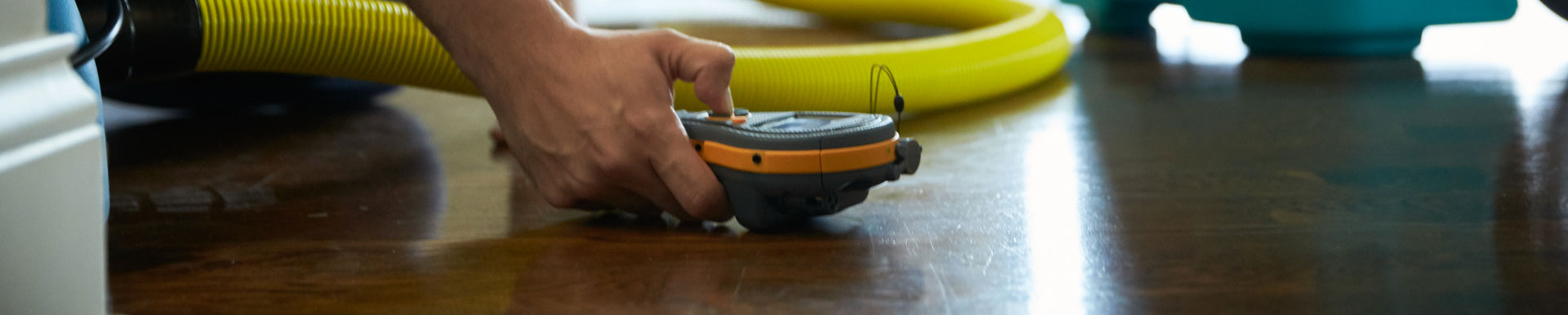
We also invest in advanced technology for water damage restoration. Our team uses professional-grade extraction equipment, moisture detection tools, air movers, and dehumidifiers to address both visible water and the moisture you cannot see. This helps reduce the risk of lingering dampness that could lead to odors, warping, or mold growth in the future.
Technical skill is only part of what makes a difficult situation easier to manage. We believe in proactive communication, which means we explain what we are doing, why we are doing it, and what comes next. From our first conversation to our follow-up after work is complete, we aim to keep you informed and supported so you do not feel alone in the process.
What To Do When You Discover Water Damage
Discovering water pooling on your floor or dripping from your ceiling can be alarming. While every situation is different, there are practical steps you can often take to protect yourself and limit damage before our team arrives. Safety should always come first, so never put yourself at risk to try to fix the problem on your own.
Staying Safe Around Water Damage
If you can safely reach your electrical panel without walking through standing water, you may choose to turn off power to the affected area. Avoid using ceiling lights if you see water coming from overhead. If the water source is a plumbing fixture or appliance that you can access without danger, you may shut off the supply valve or the main water line to the property. If there is any doubt about safety, step away from the area and wait for trained help.
Protecting Belongings & Documenting Damage
Once you and anyone else in the building are safe, you can take small steps to protect belongings if conditions allow. You might move light furniture, rugs, or valuables away from wet areas, and place aluminum foil or wood blocks under furniture legs to help reduce staining on damp floors. It can also be helpful to take photos or short videos of the damage for your records.
When To Call For Professional Help
After these initial steps, the most important action is to call for professional help. The sooner we can begin water removal and structural drying, the better the chances of limiting damage. When you contact us, we can talk through what you are seeing, provide guidance over the phone, and prepare our team with the right equipment for your situation in Dawson County.
Our Water Damage Restoration Process
Understanding what will happen in your home or business can remove some of the uncertainty you may be feeling. Our process follows a clear structure, and we tailor each step to your specific property and the type and extent of water involved.
Inspection & Assessment
The process typically begins with a detailed inspection and assessment. Our technicians walk through the affected areas with moisture detection tools and visual checks, looking for both obvious and hidden damage. We identify the category of water, such as clean supply line water, used household water, or contaminated water from sources such as sewage, since this influences the safety measures and cleaning methods we recommend.
Water Removal & Extraction
Once we understand the situation, we focus on water removal. Our team uses professional pumps and extraction equipment to remove standing water from floors, carpets, and trapped spaces. This step is important because it helps reduce drying time and minimizes the chance of moisture seeping deeper into structural materials.
Structural Drying & Dehumidification
After extraction, we move into structural drying and dehumidification. We place air movers and dehumidifiers in strategic locations to draw moisture out of walls, flooring, and the air. Throughout this phase, we return regularly to measure moisture levels and adjust equipment as materials dry. Our goal is to reach appropriate dryness levels, not simply to make surfaces feel dry to the touch.
Cleaning, Sanitizing & Odor Control
Cleaning and sanitizing are also a critical part of the process, especially when water has come from an unsanitary source. We use appropriate cleaning agents for different surfaces and contents, and we can address odors that may develop after water damage. When there is a concern about mold, or when water has remained for a longer period, we may discuss additional mold remediation steps as part of an overall plan.
Preparing For Repairs
The final stage involves preparing the space for repairs or working alongside other professionals who may handle rebuilding. This can include removing materials that cannot be salvaged, such as certain types of saturated drywall or flooring, and leaving the area clean and dry so repairs can proceed. Throughout the process, our team communicates with you about what we find, how conditions are changing, and what the next steps are so you always know where things stand.
Water Damage Challenges We Commonly See Here
Properties in and around Dawson County experience a range of water-related issues, and understanding these patterns helps us plan effective restoration strategies. Our team regularly responds to situations involving heavy rain that overwhelms gutters or roof systems, leading to leaks into attics, ceilings, and walls. We also see interior plumbing failures, such as burst pipes during cold snaps or supply lines that fail behind walls and cabinets.
Many homes and businesses in the area have water heaters, washing machines, and dishwashers that may be located in interior closets or utility rooms. When these appliances malfunction, they can release large amounts of water into living spaces, offices, or storage areas before anyone notices. We often address water that has migrated under flooring, into subfloors, or down into lower levels, which requires careful drying to avoid long-term damage.
Seasonal weather can play a role as well. During periods of heavy rainfall, properties with poor drainage or aging roofing systems may see repeated leaks or minor intrusions that, over time, cause significant damage. Freezing temperatures can strain plumbing systems, particularly in buildings where pipes run through uninsulated spaces or exterior walls. Our experience with these local challenges helps us anticipate where hidden moisture might be present and how conditions here affect drying times and equipment placement.
In addition to single-family homes, we work with small offices, retail spaces, and other commercial properties across the county. Each of these settings has different priorities, such as protecting inventory, maintaining operations, or limiting downtime. We consider these factors when planning our work so you receive a restoration approach that recognizes the realities of owning property in this area.
Support From First Call Through Final Walkthrough
Water damage can disrupt your plans, your comfort, and your sense of safety. We understand that you need more than just equipment and tools. You need a team that will listen, answer questions, and guide you through decisions when the situation feels unfamiliar.
Clear Communication From Day One
From the moment you call ServiceMaster of Mid Nebraska, our goal is to make the process as clear as possible. We begin by asking focused questions about what you are seeing and what caused the damage, if known. This helps us explain the immediate steps we recommend, give you a sense of how our team will approach the situation, and set expectations about arrival and initial actions. We want you to feel informed before we even reach your door.
Minimizing Disruption During Restoration
Once work begins, we aim to minimize disruption wherever we can. Our technicians respect that they are working in your home or business, and they take care to protect unaffected areas and maintain safe walkways. As we move through inspection, drying, and cleaning, we provide updates, explain changes we find behind walls or under flooring, and answer questions about timing and next steps. If conditions require modifications to the plan, we discuss these with you so you remain part of every decision.
Follow-Up & Quality Assurance
After the primary restoration work is complete, we do not simply remove equipment and leave. We conduct a final walkthrough with you whenever feasible so we can review what has been done, discuss any remaining concerns, and talk about what comes next for repairs or rebuilding. Our follow-up and quality assurance checks are designed to support long-term satisfaction, not just a quick fix in the moment.
Frequently Asked Questions
How fast can your team get to my property?
We respond to water damage emergencies at all hours, and our team works to arrive as quickly as conditions allow. Actual arrival times depend on factors such as your location within Dawson County, road conditions, and the number of active emergencies in the area. When you call, we will provide an estimated timeframe based on current circumstances and mobilize our technicians with the equipment your situation is likely to require. Our focus is to start mitigation as soon as we safely can so we can help limit further damage.
Can I stay in my home during water damage restoration?
Whether you can safely stay in your home during restoration depends on the severity and type of water damage. Clean water in a small, contained area may allow you to remain in other parts of the home, whereas widespread damage, structural concerns, or contamination from sewage often require more caution. Our team assesses safety during the initial inspection, including electrical risks, air quality, and access to essential spaces such as bedrooms and bathrooms. We will discuss our findings with you and outline options so you can make informed decisions about temporarily staying elsewhere if that is the safer choice.
Will you be able to save my flooring and belongings?
We always look for opportunities to restore materials and belongings when it is safe and practical to do so. The ability to save flooring, furniture, and personal items depends on several factors, including how long they were exposed to water, the type of materials involved, and whether the water came from a clean or contaminated source. Our technicians evaluate each area and item during the assessment and throughout the drying process. We then explain which materials appear salvageable, which may require specialized cleaning, and which are unlikely to recover so you can plan for repair or replacement.
How long does water damage restoration usually take?
Many water damage situations require several days of active drying, followed by additional time for cleaning and any needed repairs. Smaller, clean water events in limited spaces often dry more quickly, while larger losses that affect multiple rooms, structural materials, or insulation can take longer. Factors such as indoor humidity, the type of building materials, and how long the water was present before mitigation also influence timing. During our initial visit, we can provide a general estimate of how long drying and related work are likely to take, and we will update you if conditions change.
How do you work with my insurance company?
Many property owners choose to involve their insurance carrier after water damage, and we understand that this process can feel confusing. While coverage decisions are made by your insurer, our role is to document conditions and the work we perform in a clear, organized way. This typically includes notes, measurements, and photos that you can share with your adjuster. We can explain our findings and scope of work to you so you are prepared for conversations with your insurance representative. For specific questions about coverage, deductibles, or claim approvals, your insurer is the best point of contact.
What should I do before your team arrives?
If you can do so safely, there are a few steps that may help reduce damage before we arrive. You might shut off the main water supply or a local shutoff valve if you know the source and can reach it without entering standing water. You can also move light items and valuables away from wet areas and use towels to block water from spreading under doorways if there are no electrical hazards nearby. Taking photos or short videos of the affected areas can also be useful for your records. If at any point safety is uncertain, we recommend that you step away from the area and wait for our technicians, who have the training and equipment to handle these conditions.
How do you make sure no moisture or mold is left behind?
Our team uses moisture meters and other detection tools to look beyond surface dryness and measure how much moisture remains in building materials. During the drying phase, we regularly check these readings to confirm that walls, floors, and other components are reaching appropriate levels before we remove equipment. When we identify conditions that could support mold growth, such as prolonged dampness or contaminated water, we discuss additional steps that may be appropriate, including specialized cleaning or mold remediation services. Our goal is to leave your property dry and clean so you are not facing hidden moisture problems later.
Call ServiceMaster of Mid Nebraska For Immediate Water Damage Help
When water damages your home or business, you do not have time to search through countless options or wonder who will actually answer the phone. ServiceMaster of Mid Nebraska offers responsive water damage restoration in the area, with a team that is prepared to help you through a stressful situation with clear guidance and careful work.
Backed by more than 65 years of disaster restoration experience, we work to restore your property to pre-loss conditions whenever circumstances allow, and we stay focused on communication and quality from start to finish. Whether you are dealing with a minor leak or a significant water event, we are here to help you take the next step toward recovery.
For fast Water Damage Restoration in Dawson County, contact ServiceMaster of Mid Nebraska at (308) 280-8382.