Burst & Leaking Pipes Cleanup and Water Damage Restoration in Ft. Pierre, SD
Fast response for burst pipe emergencies, hidden leaks, and water damage restoration—serving Ft. Pierre, Pierre, and the 57532 area.
In Ft. Pierre and the Pierre area, prolonged subfreezing temperatures, wind chill, and rapid freeze-thaw cycles can put intense pressure on plumbing. Pipes typically burst when water inside the line freezes and expands, raising internal pressure until the pipe wall or a weak fitting fails. This often happens in exterior walls, crawlspaces, basements, garages, and other unheated areas, especially when insulation is missing or air leaks allow cold air to circulate around the pipe. Older plumbing, previous repairs, or corrosion can also create weak points that give way during cold snaps.
Preventing a burst pipe is usually far less costly than repairing the pipe and restoring the resulting water damage. Keep indoor temperatures consistent day and night, open cabinet doors under sinks to allow warm air to reach supply lines, and seal drafts near rim joists, sill plates, and pipe penetrations. Add insulation to vulnerable pipes, and use heat tape where appropriate, following manufacturer instructions and local code guidance. If you’re leaving town, don’t shut the heat off; set the thermostat to a safe minimum and consider shutting off the water supply and draining lines as a precaution.
If you’ve had freezing issues before or your home has rooms that run colder, take the next step by identifying at-risk areas now. ServiceMaster of Pierre can help you evaluate water-damage-prone spaces and outline a plan to reduce your risk before the next cold front hits Ft. Pierre.
Contact ServiceMaster of Pierre today for burst and leaking pipes cleanup and water damage restoration in Ft. Pierre, SD. Call us at (605) 453-5638!
Signs of a Leaking Pipe in Walls, Ceilings, or Floors (and What to Do Next)
Not all leaks announce themselves with a puddle. A slow leaking pipe inside a wall or ceiling can saturate drywall, insulation, and framing for days before you see visible damage, and by then the affected area may be much larger than expected. In many Ft. Pierre homes, the first clues are subtle: musty odors, a persistent humidity increase, or minor cosmetic changes that worsen over time. The sooner you act, the easier it is to limit damage and reduce the chance of mold growth.
- Walls: bubbling paint, peeling wallpaper, soft drywall, staining, or warped baseboards
- Ceilings: yellow or brown rings, sagging drywall, dripping light fixtures, or cracked tape joints
- Floors: cupping hardwood, loose tile, warm or damp spots, spongy subfloor, or carpet that won’t dry
- Whole-home clues: unexplained water bill increases, the sound of running water when fixtures are off, or reduced water pressure
If you suspect a hidden pipe leak, treat it as urgent. Shut off water to the fixture (or the home if needed), avoid running fans into a wall cavity without a plan, and document what you see with photos. Then contact a qualified plumber to stop the leak source and call ServiceMaster of Pierre to assess moisture spread and begin water damage restoration steps that protect building materials and contents.
What to Do During a Burst Pipe Emergency (Including How to Shut Off the Main Water Valve)
A burst pipe can release gallons of water per minute, so immediate action is critical. Your first goal is to stop the flow of water, then reduce safety risks, and finally limit the spread of water into walls, floors, and belongings. If you’re unsure where the main shutoff is located, it’s worth finding it now so you’re not searching during a crisis. In many Ft. Pierre homes, the main shutoff is near where the water line enters the house, often in a basement, utility room, crawlspace access area, or near the water heater.
- Shut off the water: Turn the main valve clockwise to close (gate valve) or rotate the lever a quarter turn so it’s perpendicular to the pipe (ball valve).
- Relieve pressure: Open a cold faucet on the lowest level to help drain remaining water from lines.
- Address electrical safety: If water is near outlets, ceilings with lights, or electrical panels, shut off power to affected areas only if it’s safe to do so.
- Contain and protect: Move valuables and furniture, place towels or buckets, and avoid walking on swollen floors that may be unstable.
- Call for help: Contact a plumber to repair the pipe and call ServiceMaster of Pierre to start extraction and drying before damage spreads.
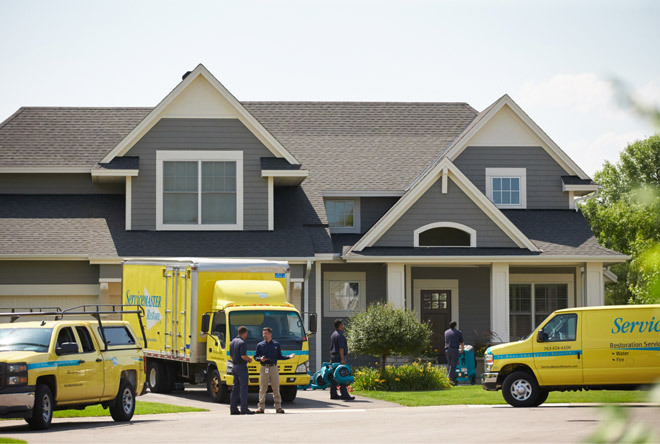
After water is shut off, the next step is minimizing water damage right away. Our team can respond to emergency water loss events in Ft. Pierre to remove standing water, document conditions, and begin professional drying so you’re not relying on guesswork while moisture continues to migrate into materials.
Professional Leak Detection: Moisture Meters, Thermal Imaging, and Hidden Water Mapping
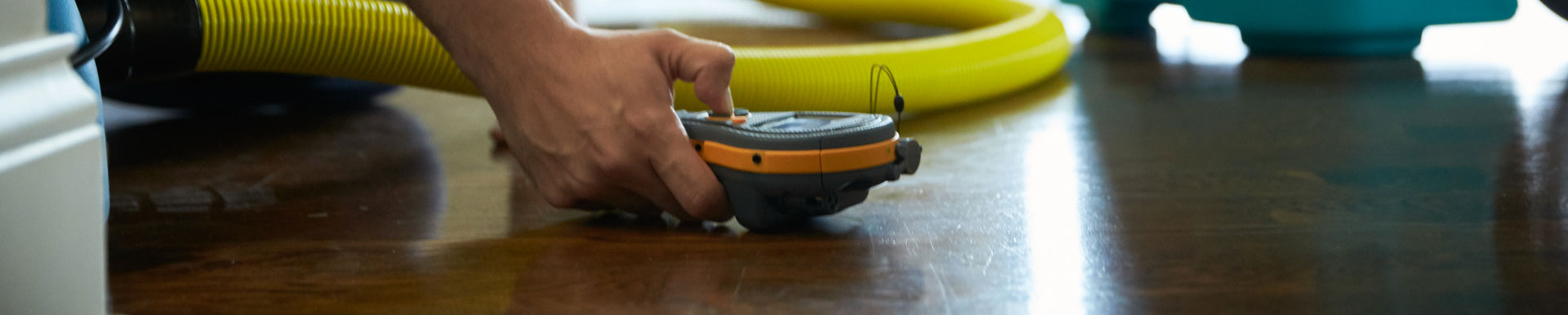
Hidden moisture is what turns a “small leak” into a major restoration project. Water can travel along framing, soak insulation, pool on subfloors, and wick upward into drywall—often well beyond the visible stain. ServiceMaster of Pierre uses professional moisture meters to measure the actual moisture content in building materials and identify where drying is still needed, not just where surfaces look wet. This data-driven approach helps target affected areas, reduce unnecessary demolition, and support accurate documentation.
Thermal imaging is also a valuable tool for locating temperature differences that can indicate evaporative cooling from wet materials or warm water lines leaking behind surfaces. While thermal cameras don’t “see” water directly, they help narrow down suspicious zones so we can confirm conditions with moisture readings. Combining these tools with a careful inspection allows us to map moisture patterns in walls, ceilings, floors, and around cabinetry or built-ins. The next step is a clear drying and monitoring plan so your home returns to a stable, dry condition.
Pipe Leak vs. Slab Leak: What’s the Difference and How to Identify Each
A standard pipe leak usually involves supply or drain lines running through walls, ceilings, or under sinks, and it may present as visible staining, dripping, or localized flooring damage. A slab leak occurs when a water line leaks beneath a concrete slab foundation, allowing moisture to travel under flooring or up through the slab. Slab leaks can be harder to detect because water may not appear where the leak actually is, and symptoms can mimic other issues like condensation or groundwater intrusion. Knowing the difference matters because slab leaks can affect flooring systems, adhesives, and subfloor conditions over a broader area.
- Common pipe leak signs: staining in a specific room, damp cabinets, wet drywall near plumbing, or dripping heard behind a wall
- Common slab leak signs: unexplained warm spots on floors, persistent damp carpet or flooring, a constant sound of running water, reduced water pressure, or sudden spikes in the water bill
Whether it’s a wall leak or a suspected slab leak, the next step is to stop the source with a licensed plumber and immediately address the moisture that’s already spread. ServiceMaster of Pierre can coordinate the restoration side—moisture mapping, drying, and repair planning—so the water damage doesn’t continue after the pipe is fixed.
Insurance, Documentation, Costs, Timelines, and Mold Risk After a Leak or Burst Pipe
Is a burst pipe covered by homeowners insurance? Often, yes—when the break is sudden and accidental and the resulting water damage is unexpected. Many policies cover the ensuing damage to building materials and contents, while the actual plumbing repair may be limited or excluded depending on the policy. Coverage can also depend on maintenance and occupancy conditions; for example, if a home wasn’t properly heated during freezing weather, some carriers may dispute the loss. Because every policy is different, the best next step is to report the claim promptly and keep clear records of the event and mitigation efforts.
What documentation is needed? Start with photos and videos of the affected areas before cleanup progresses, note when the leak was discovered, and keep receipts for any emergency supplies or temporary repairs. A plumber’s report identifying the failed component and cause is often helpful, along with restoration documentation such as moisture readings, drying equipment logs, and itemized scopes of work. ServiceMaster of Pierre focuses on thorough, professional documentation during water damage restoration to support communication with insurance and help reduce delays. The next step is to schedule an inspection so documentation begins while conditions are still fresh and measurable.
How much does burst pipe repair and water damage restoration cost on average? Plumbing repair for a burst pipe commonly ranges from a few hundred dollars for an accessible repair to a few thousand dollars when walls, ceilings, or specialty materials must be opened and restored. Water damage restoration costs vary widely based on the amount of water, how long it ran, the materials affected (hardwood, drywall, insulation), and whether secondary damage like mold is present; many residential projects fall in the broad range of $1,500 to $7,500, while larger losses can exceed $10,000+. The most accurate next step is an on-site assessment to determine the category of water, the impacted square footage, and the drying strategy required.
How long does water damage restoration take? After a pipe leak or burst, professional drying typically takes 3 to 5 days for many standard losses, but it can take longer when water has entered wall cavities, insulation, or multiple levels. Reconstruction timelines vary depending on material availability and the extent of tear-out, but drying and stabilization should begin immediately to prevent escalation. We monitor progress with moisture meters and adjust equipment to reach dry standards efficiently, rather than guessing based on time alone. The next step is to begin extraction and drying as soon as possible, because waiting even a day can significantly extend the overall project.
Mold risk after a leaking or burst pipe: Mold can begin developing in as little as 24 to 48 hours when moisture is trapped in porous materials like drywall, insulation, carpet padding, and wood. If water has soaked into hidden cavities or humidity remains elevated, professional drying is necessary to prevent microbial growth and odor issues. If mold is already present—or if conditions strongly suggest it—ServiceMaster of Pierre can guide you through containment, cleaning, and, when needed, professional mold remediation to protect indoor air quality. The next step is to schedule a professional moisture inspection, especially if you notice musty odors, worsening stains, or recurring dampness after the pipe has been repaired.
Call ServiceMaster of Pierre for Burst Pipe and Leaking Pipe Cleanup in Ft. Pierre, SD 57532
If you’re dealing with a burst pipe, ceiling leak, wet floors, or suspected hidden moisture, don’t wait for the damage to spread. ServiceMaster of Pierre provides professional water extraction, structural drying, moisture mapping, and restoration support for homes in Ft. Pierre, Pierre, and surrounding central South Dakota communities. Contact us now to schedule an inspection and start a drying plan designed to minimize repairs, reduce mold risk, and get your property back to normal as quickly as possible.
Reach out to ServiceMaster of Pierre for fast burst and leaking pipes cleanup and water damage restoration in Ft. Pierre, SD. Contact us at (605) 453-5638!