Appliance Leak Clean-Up Services in Garden City, KS
Fast, Local Help for Appliance Leaks in Garden City Homes
If you’ve lived in Garden City for a while, you know our homes have their own personalities. The older ranch-style houses near Schulman Crossing, the 1970s builds south of Kansas Ave, and the quiet manufactured homes tucked near Jennie Wilson Elementary all behave differently when water gets into places it shouldn’t. And with the hard water we deal with here in Finney County, appliance lines are under constant mineral stress—meaning even a small pinhole can turn into a major mess before you realize anything is wrong. That’s why families juggling long shifts at Tyson or kids running in and out between activities often don’t notice leaks until flooring starts to buckle or a musty odor settles in.
In homes across this region, water spreads quickly through mixed flooring—laminate in the kitchen, carpet in the living room, vinyl down the hallway. And with our dry, windy climate, surface moisture evaporates fast while hidden subfloor moisture stays trapped longer than expected. That makes small leaks deceptively destructive.
When you need Residential Appliance Leak Clean-Up Services in Garden City, KS, you’re not just dealing with water—you’re trying to protect your home, your schedule, and your peace of mind. We’re your neighbors, and we understand exactly how these homes respond to appliance water damage.
Why Appliance Leaks Destroy Floors Quickly (Appliance Leak Clean-Up in Garden City Homes)
Most appliance leaks start as clean, Category 1 water. But the minute that water spreads across a floor—collecting dust, pet hair, food debris, and minerals—it quickly becomes Category 2. According to IICRC S500 guidelines, time is the biggest factor in how much damage an appliance leak creates.
Here’s how local materials react:
- Laminate flooring swells and cups within hours, and once that happens, it’s rarely salvageable.
- Particle-board cabinets, very common in Garden City homes built from the 1980s to early 2000s, lose strength fast once saturated.
- Drywall wicks water at roughly one inch per hour, meaning a slow leak can travel up walls before you ever see staining.
Our technicians also see significant hidden moisture behind toe-kicks, under dishwashers, and behind refrigerator lines—areas most homeowners never think to check.
Common reasons appliance leaks worsen include:
- Water under refrigerators going unnoticed for days
- Dishwashers leaking from worn or loose supply lines
- Moisture migrating into wall cavities through tiny gaps
- Subfloors absorbing water long before surface signs appear
- Materials exceeding salvage thresholds due to saturation levels
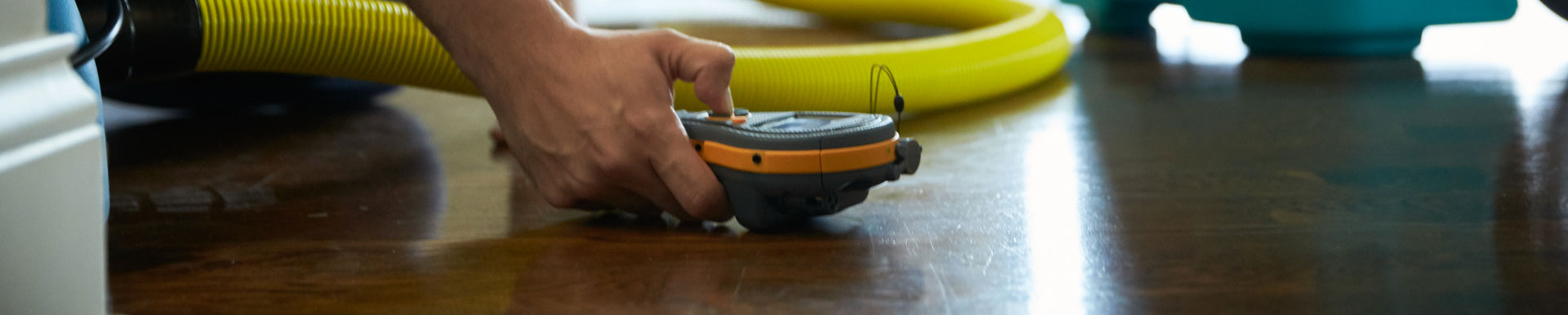
We inspect using moisture meters and thermal imaging to determine exactly where water spread. And because mold colonies can begin growing within 24–48 hours, untreated leaks become more than a flooring problem—they become a health concern.
What Garden City Homeowners Don’t See After a Dishwasher or Washer Leak
Even a small kitchen or laundry room leak creates a micro-environment under your appliances. With heat from motors and trapped humidity, microbial growth accelerates—often without any visible signs. This is especially true for dishwasher overflow cleanup, where water pushes beneath cabinets and spreads laterally across slab foundations.
Many Garden City homes sit on slab, so instead of water draining downward, it spreads horizontally, slipping beneath vinyl, carpet pad, or tile.
Hidden dangers include:
- Moisture trapped in insulation inside wall cavities
- Condensation forming on the backside of drywall
- Subfloors holding moisture long after surface areas appear dry
- Mold growth due to rapid temperature swings in southwest Kansas
Technicians address issues homeowners often don’t realize exist:
- Under-appliance moisture that creates long-term odor problems
- Cracked washer drum fins that strain hoses and create slow leaks
- Safe lifting of appliances to inspect flooring and subfloor integrity
- Strategic use of air movers to break up humid micro-environments
- Thermal imaging to pinpoint hidden seepage without opening walls unnecessarily
What you see is only part of the story—what’s happening beneath your appliances is what determines whether repairs stay simple or become extensive.
Professional Drying Steps for Residential Appliance Leak Clean-Up Services in Garden City, KS
When you call us, we follow a detailed, IICRC-standard process to ensure your home is safe, dry, and fully restored. This is the second placement of your primary keyword.
Our process includes:
1. Immediate Water Extraction
Removing standing water quickly prevents further migration into subfloors and walls.
2. Moisture Mapping
We identify all affected areas—including hidden moisture behind cabinets, under flooring, and inside wall cavities.
3. Air Movement Strategy
We place air movers to create rapid evaporation. Proper airflow angles matter, especially around toe-kicks and tight kitchen layouts.
4. Dehumidification Adjusted for Local Climate
Garden City’s dry climate can fool homeowners—you may think everything is drying quickly, but subfloors hold moisture long after surfaces appear fine. Our dehumidifiers remove this trapped moisture to prevent mold growth.
5. Daily Monitoring
We track moisture content, reposition equipment, and verify drying progress according to IICRC standards.
6. Containment When Necessary
Drying chambers isolate wet areas and speed up the process.
7. Filtration and HEPA Treatment
If microbial activity is suspected, we use HEPA filtration to maintain safe indoor air quality.
8. Documentation for Insurance
We record readings and provide full documentation to support your claim.
This is the level of detail required to truly restore your home—not just dry it on the surface.
Why DIY Fixes Fail for Washer Leak Cleanup and Refrigerator Water Line Leaks
Most homeowners respond to a wet floor with towels or a box fan. Unfortunately, that only dries the surface. Moisture trapped underneath continues damaging materials.
A refrigerator water line leak or washer supply failure often requires professional tools and a trained eye. Here’s why DIY efforts fall short:
- Consumer fans don’t produce enough CFM airflow
- Vinyl and LVP installed without vapor barriers trap moisture
- Adhesives on floating floors soften when repeatedly saturated
- Homeowners rarely remove toe-kicks correctly, limiting airflow
- Hardware-store dehumidifiers don’t achieve adequate grain depression
- Electrical components under appliances pose safety risks
- Shutting off water doesn’t address moisture already in cavities
DIY fixes lead to recurring odors, buckled floors, and hidden mold—problems that cost far more to repair later.
How We Salvage Cabinets, Subfloors, and Flooring After Appliance Leaks
Every material has a salvage threshold. Our job is to determine what can be saved—and what cannot—based on structural integrity, contamination level, and moisture content.
Garden City homes commonly use OSB subfloors, which delaminate if oversaturated. That’s why we test, document, and make recommendations based on IICRC S500 criteria.
Our restoration steps may include:
- Removing baseboards to check water migration
- Using drying mats to rescue hardwood floors
- Detaching cabinet toe-kicks for better airflow
- Treating early microbial growth before it spreads
- Performing controlled demolition only when absolutely necessary
The goal is always to save materials when possible—but to protect your home long-term when they cannot be restored safely.
Protecting Your Garden City Home From Future Appliance Leaks
Garden City’s hard water and mineral content accelerate wear on hoses, gaskets, and water lines. Preventive care reduces the risk of future leaks.
Smart steps to protect your home:
- Replace washer hoses every 5 years
- Install leak detectors behind appliances
- Inspect refrigerator water lines annually
- Check for brittle hoses after cold winters
- Ensure proper slope around the home to reduce humidity buildup
- Perform routine maintenance on dishwashers and washers
A little prevention goes a long way toward avoiding another stressful cleanup.
Why ServiceMaster Rapid Response Is the Trusted Local Partner
Homeowners call us because we understand the way Garden City homes are built—and how they respond to water damage.
What sets us apart:
- Local technicians who understand Garden City construction styles
- 24/7 emergency response
- Insurance claim coordination to simplify paperwork
- Advanced drying and moisture detection equipment
- Detailed documentation for your records and insurance provider
- A neighbor-to-neighbor approach focused on minimizing stress
We’re here to restore not just your home, but your sense of normalcy.
Call Now — Get Fast, Expert Help
If an appliance leak is spreading through your flooring or cabinets, don’t wait to see if it dries on its own. Garden City homes hide water in places only professional tools can detect. We’ll walk you through every step, handle the cleanup, and make the process as low-stress as possible. Call now for immediate help.
FAQs
Q1: How do I know if water got under my kitchen cabinets?
If toe-kicks feel soft, you smell mustiness, or flooring near cabinets is buckling, water almost certainly traveled underneath. We confirm hidden moisture using meters and thermal imaging.
Q2: My washer leaked but everything looks dry now. Could there still be damage?
Definitely. Garden City’s dry climate causes surface drying that hides deeper saturation. Subfloors and drywall often stay wet long after the surface appears fine.
Q3: How long does it take to dry a dishwasher leak?
Most appliance leaks take 2–4 days to dry with professional equipment, depending on materials and how long the water was present before detection.