Water Damage Restoration Services in Deer Park, NY
If you own a home in Deer Park, you already know that water problems don’t always announce themselves clearly. Sometimes it’s a heavy rain that overwhelms drainage. Other times it’s a pipe failure inside a wall, a leaking appliance, or groundwater slowly working its way into a basement or crawlspace. By the time water becomes visible, damage has often already spread.
Homes across Deer Park and greater Long Island vary widely—older houses with masonry foundations, mid-century construction, and newer developments built on slab or mixed foundation systems. Water behaves differently in each. At ServiceMaster by Clean Sweep Inc., we provide Water Damage Restoration Services in Deer Park, NY designed specifically for residential homes, with a focus on fast response, proper drying, and preventing hidden damage that can cause long-term issues.
Professional Water Damage Restoration That Protects More Than Just Surfaces
Water damage isn’t just about wet floors or stained ceilings. Once moisture enters a home, it begins moving through materials in ways most homeowners can’t see.
Proper residential water damage restoration is built to:
- Stop moisture from spreading into walls, floors, and structural materials
- Dry materials to safe levels, not just make them “feel” dry
- Reduce the risk of mold growth and material failure weeks or months later
Our goal is to restore your home safely and thoroughly, not rush through temporary fixes that lead to future problems.
Water Damage Restoration Services in Deer Park, NY for Long Island Homes
Deer Park homes are not one-size-fits-all, and neither is water damage. Many homes on Long Island include basements, split-level designs, or additions that create hidden moisture pathways.
We regularly restore water damage in:
- Single-family homes with finished or unfinished basements
- Split-level and ranch-style homes common throughout Deer Park
- Homes with slab foundations where water spreads laterally beneath flooring
- Older houses with porous concrete or block foundation walls
Our technicians follow IICRC S500 standards to assess the type of water involved, how far it has traveled, and which materials can be safely dried versus removed.
Emergency Water Mitigation for Deer Park Homeowners Who Need Fast Help
When water enters your home, time matters. Moisture that sits even a short time can wick into drywall, insulation, and framing, making restoration more complex.
Emergency water mitigation includes:
- Identifying and stopping the water source when possible
- Removing standing water before it penetrates deeper materials
- Installing professional air movers and dehumidifiers
- Monitoring moisture levels daily to ensure effective drying
Professional emergency water mitigation helps limit damage, reduce drying time, and lower the risk of secondary issues like mold or odor.
Why Long Island Weather and Soil Conditions Increase Water Damage Risk
Homes in Deer Park are especially vulnerable to water damage due to Long Island’s climate and geography. Prolonged rain events, high groundwater levels, and seasonal storms can saturate soil around foundations.
This often leads to:
- Hydrostatic pressure forcing moisture through foundation cracks
- Seepage through porous concrete or block walls
- Basement dampness after extended wet weather, even without flooding
Homes in lower-lying areas or with older drainage systems are particularly at risk. That’s why professional inspection beyond visible water is essential.
How Water Damages Common Residential Building Materials
Water doesn’t just soak materials—it changes them. Many building materials used in Long Island homes absorb moisture in ways that cause lasting damage if not addressed properly.
For example:
- Drywall pulls water upward through capillary action, spreading damage above the wet area
- Insulation traps moisture, slowing drying and increasing mold risk
- Particle board cabinets and vanities swell and lose structural strength
- Hardwood and laminate flooring can cup, buckle, or delaminate as moisture shifts
The EPA emphasizes rapid drying and moisture control to prevent secondary damage, which is why professional equipment and monitoring are critical.
How Professionals Detect and Dry Hidden Moisture in Your Home
One of the biggest risks after water damage is moisture that remains hidden behind walls or under floors. Even when surfaces appear dry, moisture can still be present.
Our technicians use:
- Infrared cameras to locate temperature differences caused by moisture
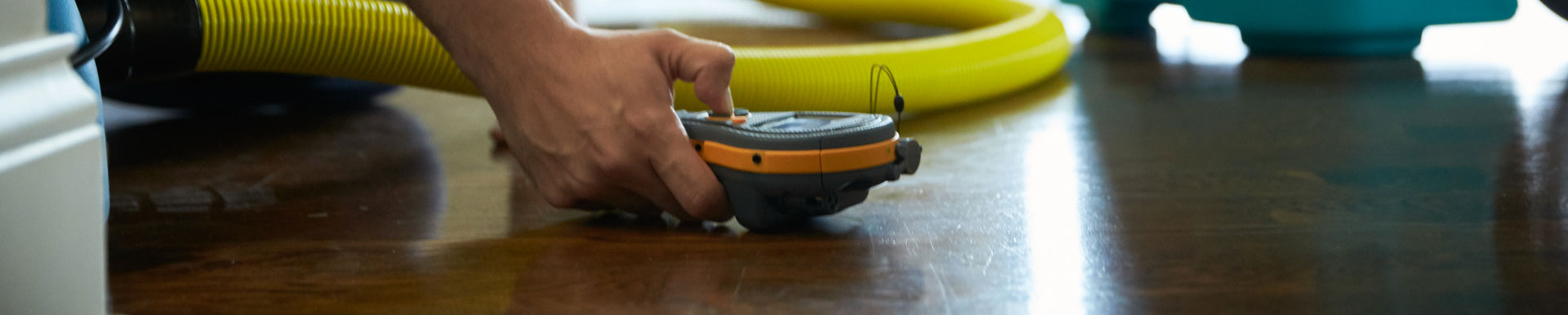
- Moisture meters to measure saturation inside walls and framing
- Hygrometers to track humidity levels throughout the home
Drying plans are adjusted based on data, not assumptions, ensuring materials reach appropriate moisture levels before equipment is removed.
Water Damage Restoration That Helps Support Insurance Claims
Water damage often brings insurance into the picture, which can feel overwhelming for homeowners. Clear documentation helps make the process smoother.
We provide:
- Photo documentation of affected areas
- Moisture readings and drying logs that show progress
- Clear explanations of what was damaged and why restoration steps were necessary
This helps homeowners stay informed while supporting the insurance review process.
Why Water Damage Restoration Is More Than Just Cleanup
Mopping water or running household fans may seem helpful, but they rarely address moisture trapped inside building materials. True restoration requires understanding how water moves through a structure.
Incomplete drying can lead to:
- Persistent odors that appear weeks later
- Paint bubbling or peeling long after repairs
- Flooring separating or warping over time
- Mold growth in hidden cavities
At ServiceMaster by Clean Sweep Inc., residential water damage restoration is treated as a complete process—not a cosmetic fix.
A Local Word of Advice for Deer Park Homeowners
If your home has experienced water intrusion, waiting often allows damage to spread quietly. Early professional assessment can reduce repair costs and help prevent problems that are harder to trace later.
If you need Water Damage Restoration Services in Deer Park, NY, contacting a qualified restoration professional sooner rather than later can make a meaningful difference in how fully your home recovers.
FAQs
How quickly should I call after water damage?
Ideally within 24 hours. Early drying reduces the risk of hidden moisture and mold growth.
Can I stay in my home during water damage restoration?
Often, yes. Many projects are contained to affected areas, allowing homeowners to remain in the home depending on damage extent.
Is water damage restoration different for older Deer Park homes?
Yes. Older homes often have more porous materials and undocumented modifications that require careful inspection and controlled drying.