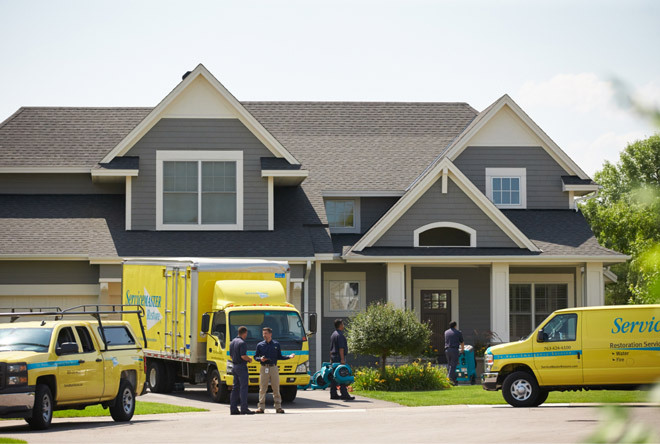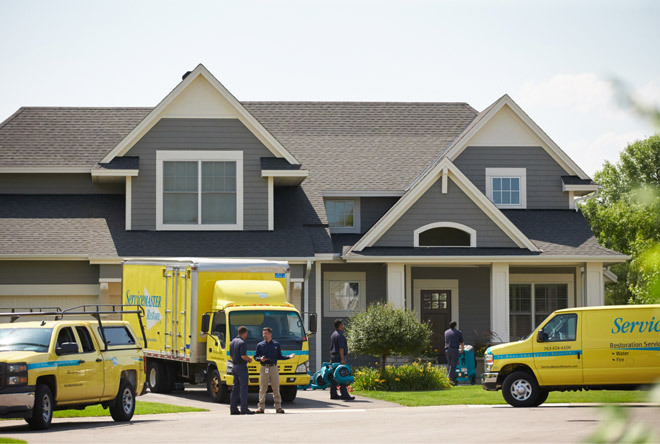
Water Damage Restoration in Webb City, MO
Rapid water extraction, drying, and cleanup from ServiceMaster by Quality Restoration - Joplin
Water damage can escalate from a minor leak to major structural problems in a matter of hours, especially in the humid swings and storm seasons common across Webb City and the greater Joplin area. ServiceMaster by Quality Restoration - Joplin delivers professional water damage cleanup and restoration designed to stop the spread, protect building materials, and help you avoid long-term issues like hidden mold and warped flooring. As part of the trusted ServiceMaster Restore network, our technicians use industry-standard methods to document moisture, dry efficiently, and restore your property with clear communication throughout the process. If your home or business in Webb City, MO has standing water, wet drywall, or damp floors, contacting a restoration team quickly is the best way to reduce downtime and overall cost.
What Is the First Thing to Do After a Pipe Burst in Your Home?
The first thing to do after a pipe burst is stop the water source by shutting off the main water valve, then prioritize safety before cleanup begins. If water is near outlets, appliances, or your electrical panel, turn off power to the affected areas only if it is safe to do so, and avoid walking through pooled water. Next, call a professional water damage restoration company so moisture is measured and removed before it spreads into walls, insulation, and subfloors. In Webb City and Joplin, cold snaps can cause sudden pipe breaks, and a fast response can be the difference between a dry-out and a major rebuild.
- Shut off the main water supply and open faucets to relieve pressure in the lines.
- Protect electrical safety by avoiding wet outlets and turning off power to affected zones if safe.
- Move valuables and furniture out of wet areas and lift items onto blocks when possible.
- Call for emergency water damage restoration so extraction and drying start before materials deteriorate.
- Document the loss with photos and notes for your insurance claim.
Even if the water looks “clean,” it can wick upward into drywall, soak carpet pad, and migrate under hardwood, creating damage that isn’t obvious at first glance. Our team can arrive with the right tools to begin mitigation and help you avoid secondary problems that develop 24–48 hours after a loss. If the water damage is related to storms or roof leaks, we can also coordinate next steps that often accompany storm damage restoration in the Joplin region. For immediate help in Webb City, MO, contact ServiceMaster by Quality Restoration - Joplin as soon as you’ve secured the water source.
Clean vs. Gray vs. Black Water: Categories That Determine the Cleanup Plan
Not all water damage is the same, and professionals classify losses by contamination level because it changes what can be saved and how the property must be cleaned. Water damage restoration teams typically follow IICRC guidelines that define categories of water and required precautions, from minimal cleaning to full removal of affected porous materials. This matters because the category affects health risks, the amount of demolition required, and how quickly materials like drywall and insulation must be removed. During our inspection in Webb City or Joplin, we identify the category and explain what it means for your home, your timeline, and your budget.
- Category 1 (Clean Water): From a broken supply line or overflowing sink with no contaminants; it can become more contaminated over time.
- Category 2 (Gray Water): Contains significant contaminants, such as dishwasher or washing machine overflow, or toilet overflow with urine only.
- Category 3 (Black Water): Highly unsanitary water from sewage backup, rising floodwater, or water that has passed through heavy contamination.
Water can also “downgrade” as it sits, meaning clean water that remains in carpet, padding, or wall cavities can become gray or black due to bacterial growth and contact with building materials. That’s why quick professional assessment is so important, even when the affected area seems small. ServiceMaster by Quality Restoration - Joplin will outline the correct containment, cleaning, and drying strategy based on the category so you can make confident decisions right away. If you’re unsure what type of water you’re dealing with, call for an on-site evaluation in Webb City, MO.
What Is Water Extraction and When Is It Necessary After Flooding?
Water extraction is the process of removing standing water and heavily saturated water from surfaces and materials using professional-grade pumps and extraction tools. It is necessary after flooding, basement backups, stormwater intrusion, or any loss where water has pooled on floors, soaked carpeting, or saturated subfloors and crawl spaces. Extraction is often the fastest way to reduce moisture load, shorten drying time, and limit swelling, delamination, and microbial growth. In practical terms, if you can see water on the floor, feel squishing under carpet, or notice water collecting in low spots, extraction should happen immediately.
- Submersible pumps and high-volume pumps for deep standing water
- Truck-mounted or portable extractors for carpet, pad, and hard surfaces
- Weighted extraction tools for pulling water out of carpet and padding
- High-velocity air movers to increase evaporation from wet materials
- LGR dehumidifiers to remove moisture from the air efficiently
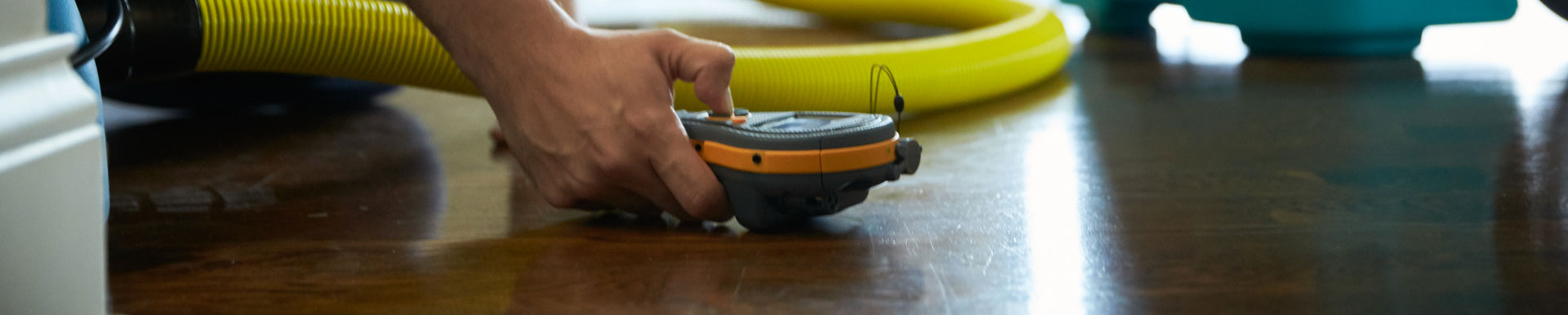
- Moisture meters and thermo-hygrometers to track drying progress
- Thermal imaging to locate hidden moisture behind walls and under floors
After extraction, drying is a controlled process, not just “letting it air out.” Our technicians create an airflow and dehumidification plan based on moisture mapping, temperature, humidity, and material type, then monitor readings to confirm that framing, drywall, and flooring reach acceptable dry standards. This professional approach is especially important in older Webb City homes with plaster, multiple flooring layers, or crawlspace humidity, where moisture can linger unnoticed. If you suspect water is under flooring or inside wall cavities, contact ServiceMaster by Quality Restoration - Joplin for rapid extraction and structural drying support.
Can Wet Drywall Be Saved, or Does It Need to Be Replaced?
Whether wet drywall can be saved depends on how long it was wet, how saturated it is, and what category of water affected it. With Category 1 (clean water) and a fast response, portions of drywall may be dried in place if the material has not lost integrity, the insulation behind it is not saturated, and moisture readings confirm it can return to normal levels. With gray or black water, drywall is typically removed because it is porous and can hold contaminants that are difficult to clean completely. When removal is needed, professionals often perform a “flood cut” to remove the damaged lower section, improve airflow inside the wall, and prepare the area for proper cleaning and rebuild.
Hardwood flooring requires the same careful decision-making, because it can cup, crown, or gap if it dries too fast or unevenly. To dry out hardwood floors after a water leak without warping, we focus on rapid surface water removal, controlled dehumidification, and specialty floor-drying systems that pull moisture from between boards while monitoring moisture content over time. Home remedies like blasting heat, running a household fan for a few hours, or sanding too early can lock in damage and make boards harder to save. If you need help protecting personal belongings as well, ask about our contents cleaning and pack-out services so items can be inventoried, cleaned, and stored while drying and repairs are completed.
Mold Risk Behind Walls, Restoration Timelines, Insurance, and Cost Per Square Foot
Hidden moisture is one of the biggest reasons water losses in Webb City turn into bigger projects, and it is also how mold can develop behind walls. Common signs that water damage may have caused mold behind drywall include a persistent musty odor, staining that expands over time, bubbling paint, soft or crumbly baseboards, or allergy-like symptoms that flare up in a specific room. Because mold can start forming within 24–48 hours under the right conditions, professional moisture detection with meters and thermal imaging is the most reliable way to confirm whether a wall cavity is staying wet. If mold is suspected, we can transition into or coordinate mold remediation services using proper containment and filtration to protect your indoor air.
Homeowners also ask, “How long does water damage restoration take with ServiceMaster Restore?” Most projects follow a predictable sequence: emergency stabilization and extraction often begin the same day, structural drying commonly takes 3–5 days, and cleaning/sanitizing may run concurrently depending on the category of water. If materials must be removed and rebuilt, the total timeline can extend to one to several weeks, especially when flooring, cabinets, or drywall replacement is required. The biggest factors are how far the water traveled, how quickly mitigation started, temperature and humidity conditions, and whether specialty drying (like hardwood floor systems) is needed.
Does homeowners insurance cover water damage cleanup and restoration? Many policies cover sudden and accidental losses (like a burst pipe or appliance failure) and may include the cost of mitigation, drying equipment, and repairs, while excluding gradual leaks, poor maintenance, or certain flood events unless you have additional coverage. Our team helps by documenting moisture readings, photographing affected areas, and providing clear estimates and drying logs that support the claim process. As for pricing, professional water damage restoration cost per square foot in the Webb City/Joplin market often falls in a broad range, commonly about $3–$7 per square foot for mitigation and drying in straightforward Category 1 losses, with higher ranges when contamination, demolition, contents handling, or reconstruction are involved. For a clear plan and a detailed estimate tailored to your property, contact ServiceMaster by Quality Restoration - Joplin now for water damage restoration in Webb City, MO.